Your website is the face of your brand. It works while you sleep. It sells your goods, tells your story, and builds trust with new leads. But a bad site can hurt your growth. It can drive people away.
You need a partner who knows how to build a site that works. The market is full of choices. Some are cheap freelancers. Some are huge firms. Finding the best fit feels hard. But it does not have to be.
The year 2026 brings new trends. AI tools are here. Speed is vital. Google cares more about user joy than ever before. You need a team that stays on top of these shifts. You need a web design agency that sees your vision.
This guide will help you find that partner. We will break down the steps. We will look at what matters most. By the end, you will know how to pick a team that helps your business win.
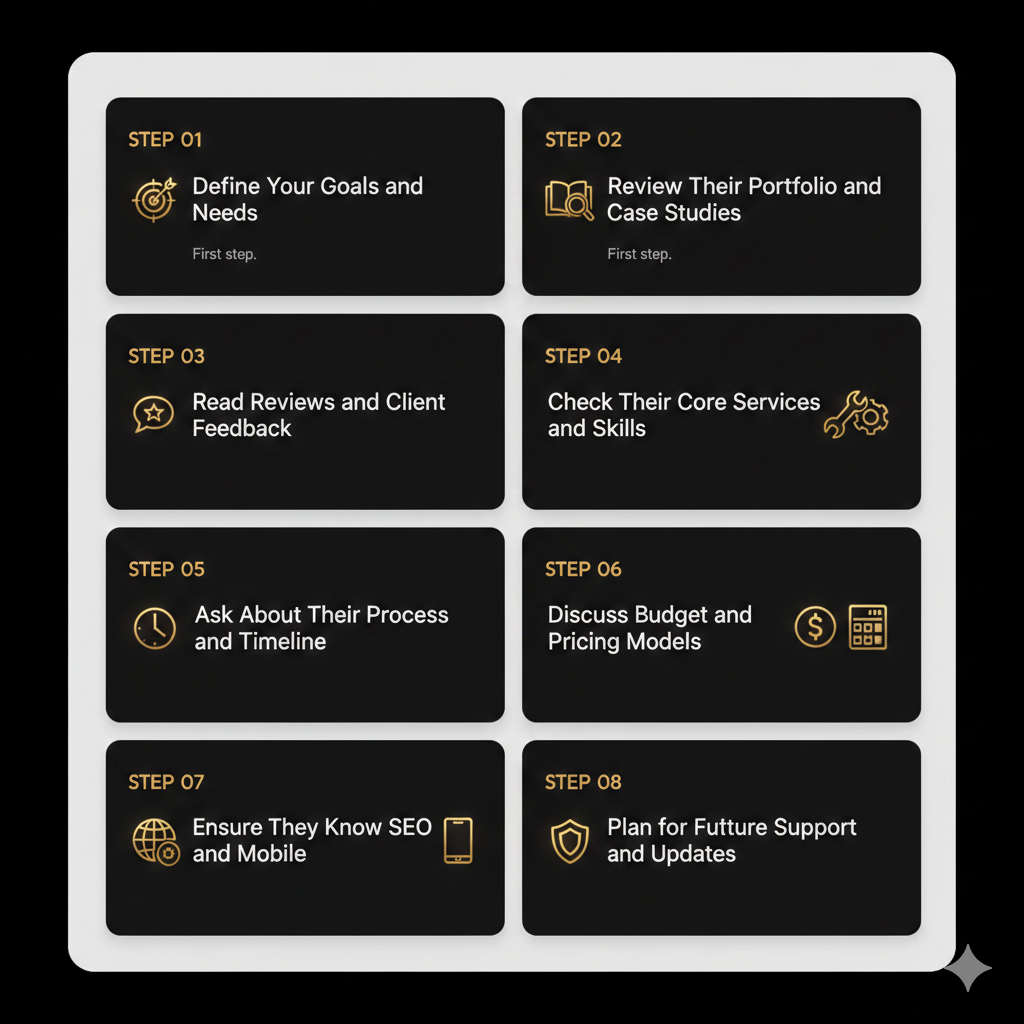
Define Your Goals and Needs First
You must define your goals and needs first. A vague request leads to vague results. Before you email any design firm, sit down with your team.
Ask the hard questions.
What do you want this new site to do?
Do you need to sell products?
Then you need a robust e-commerce setup.
Do you need to capture leads for a service?
Then you need strong forms and clear calls to action. You may need to look more professional.
List out your “must-haves.” Do you need a blog?
Do you need a member login area?
Do you need to sync with your CRM?
Write these down. This list will help you filter out agencies that lack the skills you need.
Know your timeline, too.
Do you need this done in six weeks or six months?
Rush jobs cost more. Complex jobs take time. Being clear upfront saves headaches later. It helps the web agency give you a real quote.
Also, think about your brand voice. Are you fun and loud? Or are you strict and corporate? The design needs to match this vibe. A good creative agency will ask about this. But it helps if you know the answer now.
Review Their Portfolio and Case Studies
You should review their portfolio and case studies. This is the best proof of what they can do. Don’t just look at the home page. Dig deep. Click through the links. Use the sites on your phone.
Look for variety. Does every site look the same? That is a bad sign. It means they use templates. You want a custom website that fits your brand, not a cookie-cutter layout.
Check for industry experience. Have they worked with a business like yours? If you sell food, have they built food sites? If you are a law firm, do they know the rules for legal ads? Past work in your field is a huge plus.
Read their case studies. A pretty picture is not enough. You want to see results. Did their design boost sales? Did it help the client rank higher on Google? Look for data. Look for real numbers.
Ask yourself these questions as you browse:
- Is the design clean?
- Is the text easy to read?
- Do the pages load fast?
- Is it easy to find info?
If you don’t like their past work, you won’t like what they make for you. Trust your eyes.
Read Reviews and Client Feedback
You must read reviews and client feedback. A portfolio shows the best work. Reviews show the real truth. They tell you what it is like to work with the team.
Check Google reviews. Check their Facebook page. Look at third-party sites like Clutch or Upwork. Look for patterns. One bad review might be a fluke. Five bad reviews about missed deadlines? That is a red flag.
Pay attention to how they handle problems. Did a client complain? How did the agency reply? Did they get angry? Or did they try to fix it? This tells you a lot about their character.
You can also ask for references. Ask the agency for the phone number of a past client. Call them. Ask specific questions:
- Did they stay on budget?
- Did they hit the deadline?
- Was it easy to reach them?
- Are you happy with the site now?
Most web design companies will give you happy clients to talk to. But hearing it from a real person builds trust. It gives you peace of mind.
Check Their Core Services and Skills

You need to check their core services and skills. Web design is not just about making things look pretty. It involves coding, writing, SEO, and more. Does this agency do it all? Or do they outsource?
A full-service digital agency offers more value. They can handle the copy. They can take the photos. They can help with the logo. This keeps everything under one roof. It ensures a cohesive look.
Ask about their tech stack. What tools do they use? Do they build on WordPress? Shopify? Webflow? Make sure they use a platform you can manage. You don’t want to be locked into a custom system that only they can fix.
Ask about their marketing services. A site is useless if no one visits it. Can they help with SEO? Can they run ads? Can they write blog posts? A team that knows marketing builds better sites. They build sites that convert.
Here is a list of skills to look for:
- UX/UI Design (User Experience)
- Front-end coding (HTML, CSS)
- Back-end coding (Databases)
- Copywriting
- Search Engine Optimization (SEO)
- Graphic Design
If they lack these skills, you might need to hire more people. That costs more money. It takes more time.
Ask About Their Process and Timeline

Make sure to ask about their process and timeline. Every agency works differently. Some have a strict flow. Others are more loose. You need to know what to expect.
A good process has clear steps. It usually looks like this:
- Discovery: They learn about you.
- Strategy: They plan the site structure.
- Design: They show you mockups.
- Content: They add text and images.
- Build: They code the site.
- Test: They check for bugs.
- Launch: The site goes live.
Ask how they handle feedback. Will you see the design before they build it? How many rounds of edits do you get? What if you hate the first draft? Clear rules prevent conflict.
Ask who will be your point of contact. Will you talk to the designer? Or a project manager? Good communication is vital. You don’t want to chase them for updates.
Ask about the timeline. A custom site takes time. It might take 12 weeks. It might take longer. Be wary of anyone who says they can do it in a week. Good work takes time.
Discuss Budget and Pricing Models
We must discuss budget and pricing models. This is often the hardest part. Prices vary wildly. You can pay $500 or $50,000. You usually get what you pay for.
Be open about your budget. Tell them what you can spend. This saves time. If you have $5,000 and they charge $20,000, it is not a match. But if they know your limit, they might tailor a package for you.
Understand their pricing model. Is it a fixed fee? This is best for clear projects. You know exactly what you will pay. Or is it hourly? This offers flexibility but can get pricey if the scope creeps.
Ask about hidden costs.
- Do you pay for hosting?
- Do you pay for plugins?
- Do you pay for stock photos?
- Is support extra?
Get everything in writing. A clear contract protects both sides. It lists exactly what is included. It stops surprise bills.
Don’t just pick the cheapest option. Your website is an asset. It brings in money. Invest in quality. A cheap site often breaks. It looks bad. It costs more to fix later.
Ensure They Know SEO and Mobile

You have to ensure they know SEO and mobile. In 2026, these are not options. They are vital. A site that looks good but does not rank is useless.
Ask how they handle SEO services. Do they optimize the code? Do they speed up the images? Do they write proper meta tags? A good web developer builds with SEO in mind from day one.
Ask about the mobile. Most people browse on phones now. Google checks the mobile version first. The site must adapt to any screen size. It must have big buttons. It must load fast on 4 G.
Test their own website on your phone. Is it hard to use? If so, run away. If they can’t make their own site work on mobile, they can’t make yours work.
Ask about Core Web Vitals. These are speed metrics from Google. A slow site hurts your rank. It annoys users. The agency should know how to make a site fly.
Plan for Future Support and Updates
You should plan for future support and updates. A website is never truly “done.” Software updates. Links break. Content gets stale. You need a plan for the long haul.
Does the agency offer a maintenance plan? This usually includes:
- Daily backups.
- Plugin updates.
- Security scans.
- Small content edits.
This service is worth the cost. It keeps your site safe. It frees you up to run your business.
If you don’t want a plan, ask if they will train you. Will they show you how to add a blog post? Will they show you how to change a photo? They should provide a video guide or a manual.
Ask what happens if the site gets hacked. Will they fix it? How much will it cost? Knowing this now saves panic later.
Also, ask about ownership. Once the final bill is paid, who owns the site? You should own it. You should own the code, the content, and the domain. Never let an agency hold your site hostage.
Watch Out for These Red Flags
You must watch out for these red flags. The web industry has some bad actors. Spotting them early saves you money and stress.
Red Flag 1: No Questions.
If they give you a quote without asking about your goals, run. They are just selling a template. They don’t care about your business.
Red Flag 2: Too Cheap.
If the price sounds too good to be true, it is. A $500 custom site does not exist. They will cut corners. They will use stolen graphics. Or they will upsell you later.
Red Flag 3: Bad Comms.
Do they take days to reply to an email? Are they rude on the phone? This will not get better after you pay.
Red Flag 4: They Say “Yes” to Everything.
A good partner pushes back. If you have a bad idea, they should tell you. If they agree to every request, the site will be a mess. You are paying for their expert skill. Let them use it.
Red Flag 5: No Contract.
Never start work without a signed deal. It protects your money. It defines the scope. Working on a handshake is a risk you should not take.
Final Decision: Trust Your Gut
You need to trust your gut feeling. You have done the research. You have met the teams. You have seen the numbers. Now, how do you feel?
You will work closely with this agency for months. You need to like them. Do they get your vision? Are they excited about your project? Is the vibe right?
The relationship matters as much as the skills. If you dread calling them, the project will fail. Pick the team that makes you feel heard. Pick the team that acts like a partner, not a vendor.
Take your time. Compare your notes. Weigh the pros and cons. The right choice will feel clear.
Frequently Asked Questions
How much should a business website cost in 2026?
Cost depends on the scope. A simple site might cost $3,000 to $8,000. A large e-commerce site could cost $20,000 or more. Avoid offers under $1,000 for business needs.
How long does it take to build a website?
A custom site typically takes 12 to 16 weeks. Smaller sites can be done in 8 weeks. Complex platforms may take 6 months.
Should I hire a freelancer or an agency?
Hire an agency for reliability and full skills (design, code, SEO). Hire a freelancer for small budgets or simple tasks.
What platform is best for my business?
WordPress is best for content and flexibility. Shopify is top for selling goods. Webflow is great for high-end design. Ask your web partner what fits your goals.
Do I need to provide the text and photos?
Usually, yes. But full-service agencies can do this for an extra fee. It is often better to let pros write the copy for SEO.
Make the Right Choice Today
Your website is key to your future success. It is the hub of your digital world. Choosing the right web design agency is a big step. But with this guide, you are ready.
Focus on your goals. Check the past work. Talk to real clients. Watch for red flags. And trust your gut.
Don’t settle for average. Your business deserves a site that stands out. It deserves a site that sells. Start your search today. Find the partner who will help you grow in 2026 and beyond.